Live in Texas long enough and your skin keeps a record of it — brown spots, a flush that won't quit, the fine red threads of broken capillaries. IPL is how we edit that record, and at Privé Aesthetics in Dallas it's our go-to for sun damage, redness, and uneven tone.
Part of our complete guide to skin rejuvenation.
IPL is one of the most satisfying treatments we do, because the change is visible and the logic is simple: it targets the color in your skin that shouldn't be there — the browns of sun damage and the reds of broken vessels — and clears it, leaving the even tone underneath. Here's what it does, what it doesn't, and why the Dallas sun makes it a year-round conversation.
What IPL actually is
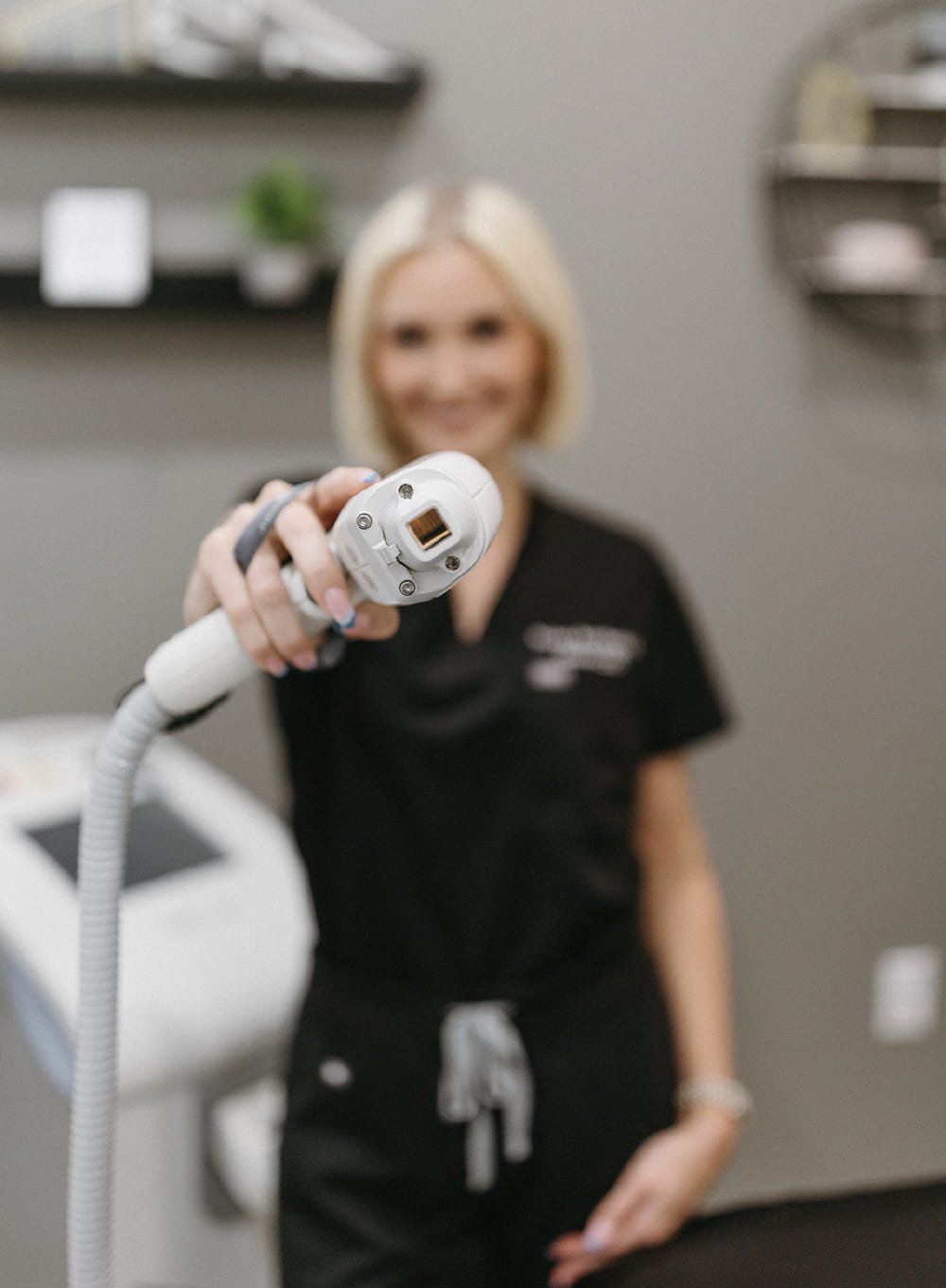
IPL stands for intense pulsed light — and the important distinction is that it's not a laser. A laser uses one focused wavelength; IPL uses a broad spectrum of light that's absorbed by two targets in particular: melanin (brown pigment) and hemoglobin (the red in blood vessels). The light heats those targets, the body clears them, and the surrounding skin is left alone. That dual action — brown and red — is what makes IPL such a versatile tone-corrector.
What it treats
Sun spots, age spots, and freckling from cumulative UV exposure — the brown patches that concealer chases but never fixes. Rosacea redness and facial flushing. Broken capillaries and the small red vessels around the nose and cheeks. And overall dullness and uneven tone — the cumulative result is a clearer, more even complexion. In a climate with year-round sun like ours, that sun-damage layer builds quietly, which is why IPL is a maintenance conversation here, not a one-time fix.
What IPL does not do
This is the part worth being clear about. IPL treats color, not texture. It won't resurface skin, soften deep wrinkles, or treat acne scars — that's the job of resurfacing tools like fractional CO₂ laser or microneedling. And because IPL works by targeting pigment, it isn't right for skin that's actively tanned or for deeper skin tones, where that same pigment-seeking action carries risk. We screen carefully for this — the wrong candidate for IPL is better served by a different tool.
The timeline — and the "coffee grounds" stage
IPL is a series — typically three to five sessions about a month apart, then maintenance. The satisfying part comes fast: in the days after a session, treated brown spots often darken and rise to the surface before flaking away (patients sometimes describe it as "coffee grounds"), revealing clearer skin underneath. Redness fades more gradually across the series. Downtime is minimal — some pinkness the day of, then back to normal with makeup if you like.
IPL vs. Clear + Brilliant — which do you need?
The cleanest way to choose: IPL is for color, Clear + Brilliant is for texture. If your concern is brown spots, redness, and tone, IPL is the tool. If it's smoothness, pores, and fine lines, a gentle fractional laser like Clear + Brilliant is the better match. Many patients alternate them over a year — one keeps the color even, the other keeps the surface refined.
What it costs — and the one rule afterward
IPL at Privé starts at $175, with most plans built as a series; we quote the full course at consultation. And the one non-negotiable: strict daily SPF. The entire point of IPL is undoing sun damage — walking back into the Texas sun unprotected simply rewrites the record you just cleared. The result lasts as long as you protect it.
Frequently asked
How much does an IPL photofacial cost in Dallas at Privé?
IPL starts at $175 at Privé, with most plans built as a series of three to five sessions. We quote the full course at consultation based on what you're treating.
What does IPL treat?
IPL targets color in the skin: sun spots, age spots, freckling, rosacea redness, facial flushing, and broken capillaries, plus overall dullness and uneven tone. It treats brown and red — pigment and vessels — in the same session.
Is IPL safe for darker skin tones?
IPL works by targeting pigment, so it isn't the right tool for actively tanned skin or for deeper skin tones, where that pigment-seeking action carries risk. We screen carefully and recommend a different treatment when IPL isn't a safe match.
How many IPL sessions will I need, and is there downtime?
Most plans are three to five sessions about a month apart, then maintenance. Downtime is minimal — some pinkness the day of. Treated brown spots often darken and flake off over the following days before revealing clearer skin.
What's the difference between IPL and Clear + Brilliant?
IPL is for color (brown spots, redness, tone); Clear + Brilliant is for texture (smoothness, pores, fine lines). They solve different problems, and many patients alternate them over a year.
Does IPL hurt?
Most patients describe it as a quick rubber-band snap with each pulse — very tolerable. The treatment is fast, and we keep the skin cooled.