At Privé Aesthetics in Highland Park, Dallas, dermal filler is placed with a less-is-more philosophy — proportion before volume, restoration before transformation, the smallest dose that achieves the goal. The over-filled face has become a Dallas signature. We don't want our work to be one of them.
Part of our complete guide to filler and Sculptra.
Filler is the most common injectable conversation we have at consultation, and it is also the one where the brief most often diverges from the right answer. A patient comes in asking for "more cheek." On examination, what they actually need is structural support along the zygomatic arch — not bulk in the apple of the cheek. Get that wrong and the result is the rounded, top-heavy face that reads as "filler" before it reads as the patient. Get it right and the same person walks out looking like a well-rested version of themselves — with no one quite sure what changed.
What "less is more" actually means with filler
It means three specific things at Privé.
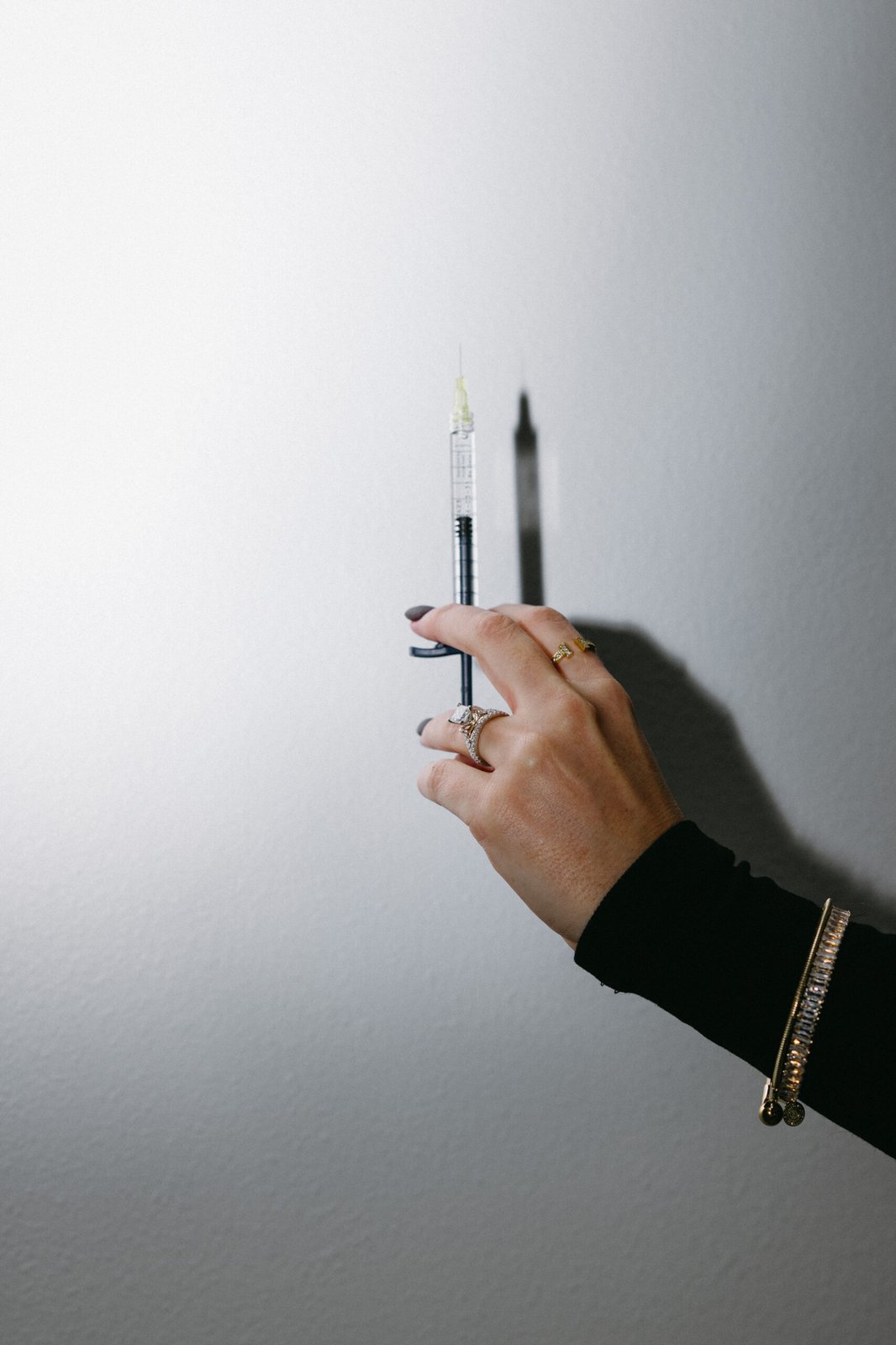
One: we work in conservative increments. Most first-visit aesthetic plans use one to two syringes — sometimes less. We do not chase the "before/after dramatic" reveal at the cost of subtle, accurate placement. A two-week follow-up determines whether to layer more, and the decision is driven by how the face actually settles, not by what we predicted at consult.
Two: we calibrate per area, not per chart. The same syringe of Juvéderm Volux that builds beautiful structure in one patient's jawline can land heavy and obvious in another's. Bone shape, skin thickness, fat-pad distribution, age, prior treatment history — all of it changes the dosing math. We assess in person and dose to the face in front of us.
Three: we lean on the reversibility of hyaluronic acid filler as a safety net. Juvéderm, Restylane, RHA, and Skinvive are all HA-based and dissolvable with hyaluronidase, which we stock on-site. The reversibility means we can start small with confidence — if more is needed, we layer; if something settles wrong, we adjust. Other filler categories (PMMA, silicone) cannot be safely undone, which is one reason we don't use them.
Why we work this way
Filler at Privé is placed by Elizabeth Hurley, RN, BSN, CANS — a Certified Aesthetic Nurse Specialist, a credential held by only seven nurses in Texas at the time of her certification. The CANS training emphasizes a specific principle that shapes everything we do with filler: the goal is harmony, not addition.
Patients who come from clinics with heavier-handed dosing sometimes need a few sessions to reset to the Privé baseline. The first reaction is occasionally "I thought I'd see more change." The honest answer is: you will. Subtle, well-placed filler builds beautifully over time. Aggressive single-visit corrections almost always require dissolving and starting over within twelve months. We'd rather you stay refined for years than dramatic for months.
Where it shows up most
Lips. The single area most prone to overcorrection. Our default is Restylane Kysse or Juvéderm Ultra at conservative volume — usually half to one syringe at a time, with the option to layer at two weeks. The goal is definition and hydration, not pillow lips. We talk through what shape the lips have naturally, and we work with that shape rather than imposing a different one.
Cheeks and mid-face. This is where structural placement matters more than volume. Voluma or Restylane Lyft along the zygomatic arch lifts the mid-face without bulking the apple of the cheek. Done right, it improves the projection patients are usually after; done wrong, it produces the round-faced, age-ambiguous look that people see in mirrors and don't recognize themselves.
Jawline and chin. Often the most rewarding area for proportion-driven work. Restylane Defyne or Juvéderm Volux placed precisely along the mandibular border can sharpen a jawline that has lost definition with age — without making the lower face look surgically reshaped. Chin projection is similarly subtle; we add millimeters, not magnitudes.
Under-eye (tear trough). The most technique-sensitive area in filler. Done correctly it softens hollow shadows that no concealer fixes. Done incorrectly it creates puffiness, the "Tyndall effect" blue tint, or fluid retention that can last months. Our default is Restylane EyeLight, placed deep on bone via microcannula, in very small volumes. We are highly selective about which patients get under-eye filler at all — many are better served by SkinPen + Ariessence PDGF or other regenerative protocols for texture and tone.
Skin quality (Skinvive). A newer category — intradermal microdroplets of hyaluronic acid placed across the cheeks to improve skin smoothness and hydration. Not a volumizer; a skin booster. Pairs well with the Luxe Skin Club membership cadence.
The over-filled face — and how we avoid it
The "filler face" everyone recognizes is usually the result of three habits stacking up over years: too much volume placed too superficially in the cheek, lip filler that exceeded the patient's natural lip-to-face proportion, and chin/jawline filler that wasn't accounting for the lift work being done elsewhere. Each individual visit might have looked fine; the cumulative effect is what reads as overdone.
Our defense against this is the same defense we use for Botox: start light, layer up, follow up at two weeks, and reassess the whole face every visit instead of treating each area in isolation. Once a year we recommend a "reset consultation" where we look at the trajectory of cumulative work and decide whether to keep adding, hold, or dissolve and rebuild.
What this is not
Less-is-more at Privé is not a cost strategy. Dermal filler at Privé is transparently priced — $700 per syringe for Juvéderm and Restylane, $1,200 per area for Skinvive. We charge for what we use and use what the face needs. Patients on the conservative protocol typically pay less per visit than they would at a clinic dosing to the upper end of every range, but that is a side effect of the philosophy, not the strategy.
It is also not philosophical purity over patient goals. Some patients have specific structural goals — pronounced cheek projection, fuller lips than their starting baseline, dramatic jawline definition — and we can build to those goals when they are clinically appropriate. We discuss the trade-offs honestly. There is a version of filler that produces those results without crossing into "filler face" territory; it requires more visits and more patience than the single-session full-correction approach.
Who this approach is right for — and who it isn't
It is right for clients who want filler to enhance the face they have rather than to construct a different one. Patients in their 30s and 40s easing into a long-term aesthetic plan. Patients who have had bad experiences with overcorrection elsewhere and want to reset. Visual-performance professionals (anchors, executives, photographers) who can't risk dramatic changes between visits.
It is not the right fit for patients seeking a single-session dramatic transformation. We can offer that conversation in consultation, but we will be honest if we think a different provider or a different intervention (surgical, regenerative, or both) would serve the goal better. We'd rather refer than over-promise.
How filler fits into the bigger plan
Filler at Privé rarely operates in isolation. For most patients the right combination is filler layered with conservative Botox for expression areas, Sculptra for gradual collagen-driven structural restoration, regenerative work like SkinPen + Ariessence PDGF for skin quality, and the membership cadence for skin maintenance. The treatments work together. Asking filler alone to do the work of three categories is one of the fastest paths to overcorrection.
Frequently asked
How much does dermal filler cost in Dallas at Privé?
Juvéderm and Restylane HA fillers start at $700 per syringe. Skinvive is $1,200 per area. Most aesthetic plans use one to two syringes at a time; the right number is determined at consultation based on goal and current proportion.
How many syringes do I need?
Most first-visit aesthetic plans use one to two syringes — sometimes less. We work in conservative increments rather than full-volume corrections in a single appointment. A two-week follow-up determines whether to layer more, and the decision is driven by how the face actually settles, not by what we predicted at consult.
Will my filler look natural?
Yes — preserving natural proportion is the defining intent of our approach. We work for restoration and refinement, not transformation. The goal is for friends to notice you look well-rested, not to notice the filler itself.
Which filler do you use for lips?
Restylane Kysse and Juvéderm Ultra are the most common; the right choice depends on the lip anatomy, the goal (definition vs hydration vs structure), and how the patient's lips have responded to filler historically. Both have established safety profiles and are reversible with hyaluronidase.
Is filler reversible if I don't like the result?
Hyaluronic acid fillers (Juvéderm, Restylane, RHA, Skinvive) are dissolvable with hyaluronidase — an enzyme we stock on-site for any reversal scenario. The reversibility is a major reason we use HA filler as our default; other filler categories (PMMA, silicone) cannot be safely undone.
How long does dermal filler last?
Most HA fillers last 9 to 18 months depending on the product, the placement depth, and the area treated. Lip filler tends to metabolize faster (6-12 months); deep mid-face and jawline placements last longer. We discuss expected longevity per area at consultation.