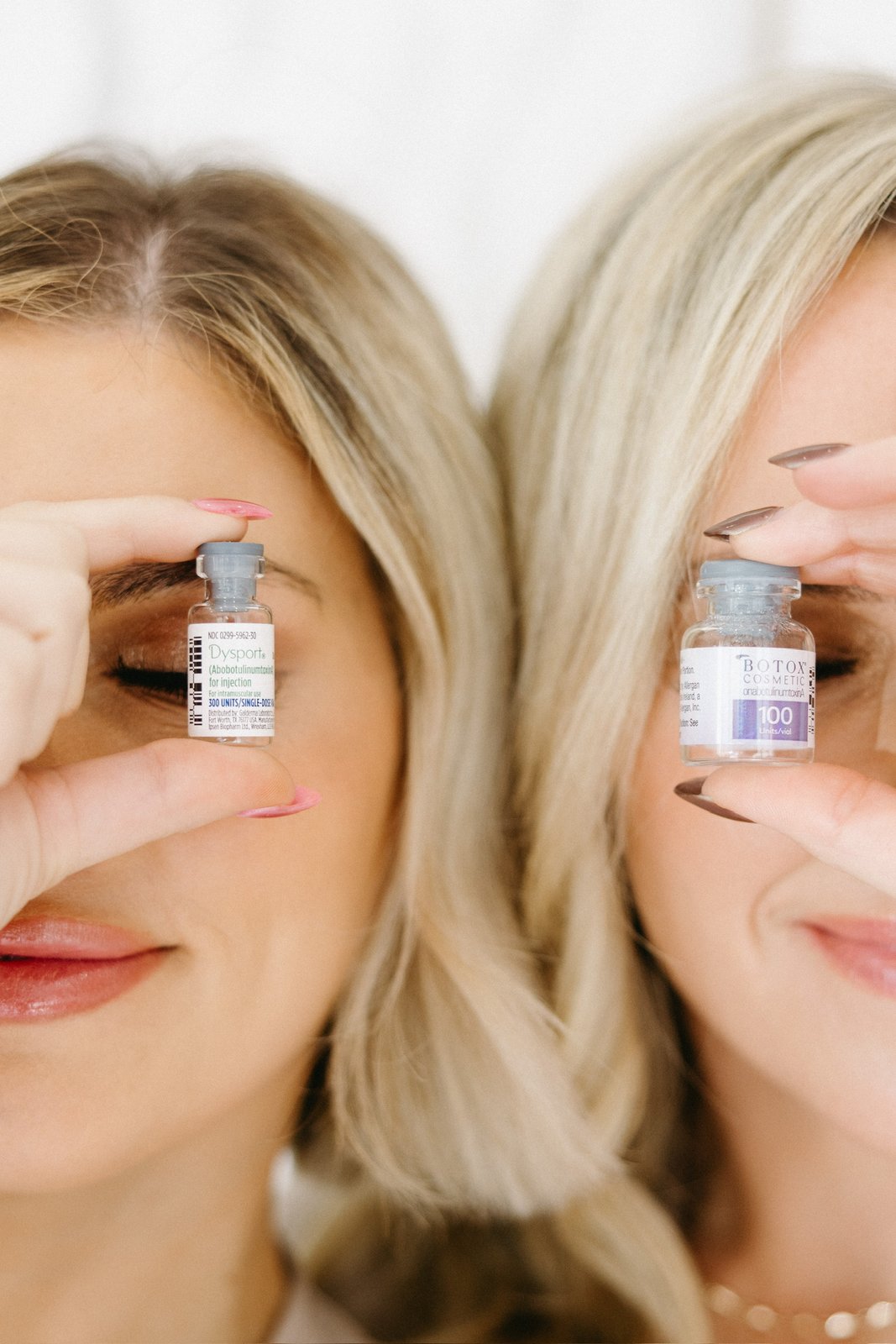
At Privé Aesthetics in Highland Park, Dallas, Botox is administered with a deliberately conservative dosing philosophy — designed to preserve natural expression rather than freeze it. Conservative does not mean less effective. It means trained restraint.
The over-treated face has become a Dallas tell. You can spot it in a restaurant from the next table over, in school pickup line photos, in the mirror after one too many "while you're at it" units. The look is not a Privé look. The reason we treat the way we do has less to do with style preference and more to do with how we think about what Botox should and shouldn't change about you.
For the comprehensive version — every treatment area, transparent pricing, Botox vs Dysport, safety, and how to choose a provider — see The Complete Guide to Botox in Dallas. This piece focuses specifically on the dosing philosophy.
What "conservative dosing" actually means
The phrase gets used loosely. At Privé it means three specific things.
One: we begin at the lower end of the FDA-approved dosing range for a given area, rather than defaulting to the upper end. For the glabella (the frown lines between the brows), the FDA-approved range is 4 to 20 units. Most clinics dose toward 20 by default. We start lower and adjust at a two-week follow-up if the response is too subtle.
Two: we calibrate per patient, not per chart. Two patients of the same age presenting with the same glabellar lines do not get the same number of units. Muscle strength varies. Skin thickness varies. Metabolic rate of the toxin varies. Long-time Botox users may have softened their muscles over time and require less; first-time patients with strong baseline contraction may require more.
Three: we work in additive sequence rather than full-dose-first-visit. Almost any conservative dose can be safely added to at a two-week follow-up. A too-strong result cannot be safely reduced — there is no reliable reversal agent for Botox. The asymmetry of risk makes "start light, layer up" the responsible default for any patient we don't have years of dosing history with.
Why we work this way
Privé's lead clinician is a Certified Aesthetic Nurse Specialist (CANS) — one of the most rigorous nursing credentials in aesthetic medicine, with all procedures MD-supervised by our Medical Director, Dr. Gregory Gardner, DO. The certification training emphasizes a single recurring principle: the goal of aesthetic injection is enhancement that the patient owns, not transformation that the room notices.
That principle shapes how we think about every consultation. The question we ask is not "how much Botox will erase your wrinkles," but "how much movement preservation can we hold onto while still softening the lines you don't like?" Those are different questions, and they produce different injection plans.
The practical consequence: patients who come from clinics with heavier-handed dosing often need a few visits to reset to the Privé baseline. The initial complaint is sometimes "I can still move my forehead." That is the intended result, not a failure of treatment.
The areas where it matters most
Forehead lines. The frontalis muscle does the lifting work that keeps the brow elevated and the upper face mobile. Over-relaxing it produces the heavy, flat-affect look most patients are trying to avoid — and, in some patients, actually drops the brow rather than lifting it. Conservative dosing here is the difference between a softened forehead and an expressionless one.
Crow's feet. The orbicularis oculi muscle is what produces an authentic smile that engages the eyes. Over-treat it and the smile becomes mouth-only — the photographable "Botox smile" most clients would describe as a bad outcome if they saw it on someone else. Dosing here is light by default.
Masseter (jaw slimming). This is the area where dosing varies most by patient. The masseter muscle can be 6mm thick or 12mm thick. The same dose produces very different results on those two patients. We map the muscle bulk by palpation at consultation and dose to that, not to a chart.
Lip flip. A common request, easy to over-dose. Too much Botox in the upper lip and the patient loses the ability to articulate consonants — "p," "b," "m" become work. Conservative dosing here is two to four units max, often less.
What this is not
Conservative dosing at Privé is not a marketing position. It is not under-dosing to charge less. It is not a way of stretching units to make a vial last longer.
Privé's pricing is transparent: Botox is currently $13/unit, Dysport is $4/unit. We charge for what we use. Patients on the conservative protocol typically pay less per visit than they would at a clinic dosing to the upper end of every range. The lower bill is a side effect, not the strategy.
We are also not opposed to fuller treatment when it is the right answer for the patient and their goals. Patients with very strong muscles, very deep static lines, or specific medical indications (chronic migraine, masseter hypertrophy, hyperhidrosis) sometimes need doses at the upper end of the range. The dose follows the patient. The philosophy is that we let the face tell us what it needs rather than imposing a one-size protocol.
Who this approach is right for — and who it isn't
Conservative dosing is the right fit for patients who want a softened, refreshed version of themselves that does not announce itself as treatment. It is also the right fit for first-time Botox patients, for patients with prior overcorrection they want to walk back, and for patients in visual-performance careers (anchors, executives, photographers) for whom expression control is part of the job.
It is not the right fit for patients who specifically want a fully frozen result — that requires upper-range dosing and produces the look our philosophy is built to avoid. We are honest about this in consultation. There is no point starting a treatment relationship if the goal pictures the patient is showing us are not pictures we can ethically produce.
How this fits into a broader treatment plan
Botox at Privé rarely operates in isolation. For most patients the right combination is Botox layered with dermal filler for areas of true volume loss, regenerative work like SkinPen + Ariessence PDGF for skin quality, and skin maintenance through the Luxe Skin Club membership. The treatments work together — aggressive single-modality treatment is rarely the answer for any face.
That layered approach is part of why our dosing can be conservative. We are not asking Botox to do the work of three treatments. We are asking it to do the work of one, well.
Frequently asked
How many units of Botox do you typically start with?
Starting doses are individualized per patient and area, but we generally begin at the lower end of the FDA-approved dosing range and adjust based on response at a two-week follow-up. The exact number depends on muscle strength, treatment area, and aesthetic goal — not a one-size protocol.
Will my expression still look natural after Botox at Privé?
Yes — preserving natural expression is the defining intent of the conservative-dosing approach. The goal is softened lines with preserved movement. Patients who want a fully frozen result are routed to a longer consultation about expectation alignment, because that result requires a different philosophy than ours.
Is conservative dosing just under-dosing to charge less?
No. Botox at Privé is priced per unit transparently (currently $13/unit), so conservative dosing typically means lower total cost for a given visit — but the reason is clinical, not financial. We charge for what we use, and we use what the face needs.
What if I want a more dramatic result than conservative dosing gives me?
We can layer additional units at a two-week follow-up if the initial result is too subtle. The reverse — softening a too-strong result — is much harder because Botox does not have a reliable reversal agent. Starting conservatively and adding is the safer sequence.
How often will I need touch-ups with conservative dosing?
Typical Botox results last three to four months regardless of dosing level. Patients on the conservative protocol sometimes return at the three-month mark rather than four, but most settle into a quarterly cadence that integrates with our Luxe Skin Club membership rhythm.
Do you use the same approach for first-time patients and returning patients?
The philosophy is the same; the dose is individualized. Returning patients with established response patterns may receive slightly adjusted dosing based on what we have learned about their muscle response, lifestyle, and goal evolution. First-visit patients start at the lower end while we calibrate.