

Microneedling and RF microneedling sound like the same treatment with a longer name. They aren't. At Privé Aesthetics in Dallas, the deciding factor between them comes down to one word: heat — and whether your skin needs it.
Part of our complete guide to skin rejuvenation.
We offer both SkinPen microneedling and radiofrequency (RF) microneedling, and patients often assume the RF version is simply "the better one." It's not better — it's different, and matching the right tool to the right skin is the whole game. Here's how we decide.
What RF microneedling actually does
Standard microneedling creates thousands of tiny micro-channels in the skin. Those controlled micro-injuries trigger your body's wound-healing response, which means new collagen — that's the engine behind texture and tone improvement.
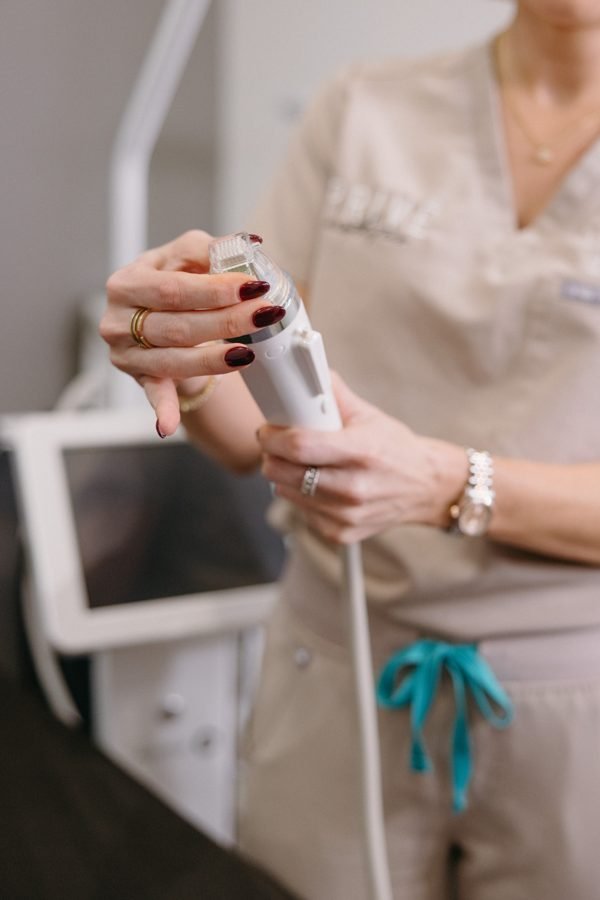
RF microneedling adds a second mechanism on top. Insulated micro-needles deliver radiofrequency energy deep into the dermis, heating the deeper tissue to remodeling temperatures. So you get the collagen-induction of needling plus a deep thermal contraction-and-rebuild effect. At Privé, that's 48 gold-tipped needles, depth-mapped to the area — shallower at the brow, deeper at the jaw — with neocollagenesis building over the following 8 to 12 weeks.
The real distinction: needles vs. needles-plus-heat
Here's the cleanest way to think about it. SkinPen — microneedling alone, no heat — is superb for the surface: skin texture, tone, fine lines, enlarged pores, overall glow. It's gentle, versatile, and ideal as part of a regular maintenance rhythm.
RF microneedling brings the deep-dermal heat that needling alone can't produce. That thermal step is what addresses laxity — the structural loosening that surface treatments simply can't reach.
When we choose RF over SkinPen
We reach for RF microneedling when the goal involves tightening or deeper remodeling:
Skin laxity and a softening jawline. The most common reason. When skin has started to loosen along the jaw or lower face, the deep RF heat tightens in a way needling alone won't.
Deeper acne scars and textural depth. For scarring that lives below the surface, the combination of channels plus dermal heat remodels more effectively than surface needling.
Crepiness and mild sagging. Areas where the skin needs structural rebuilding, not just resurfacing.
And we choose SkinPen when the goal is surface-level: refining texture and tone, softening fine lines, minimizing pores, maintaining glow — especially for younger skin, lighter budgets, or a steady maintenance cadence. Plenty of patients use both over the years, for different goals at different times.
"But what about Morpheus8?"
It comes up in nearly every consultation, so here's the honest answer. Morpheus8 is one brand of RF microneedling device. The category is the same as what we do — insulated micro-needles delivering radiofrequency heat into the dermis. What actually determines your result is far less about the brand name on the handpiece and far more about the clinician's depth and energy settings, mapped to your skin type and your goal. A skilled operator on a quality RF platform produces excellent results; the device logo is marketing. That's where our attention goes — not the badge.
The timeline, downtime, and aftercare
We apply topical numbing for 30 to 45 minutes, so the treatment is well tolerated — pressure and warmth more than pain. Afterward, expect redness, mild swelling, and occasional pinpoint bruising for 24 to 72 hours. Then strict SPF 30 or higher for two weeks, because the new collagen and the open channels are photosensitive — non-negotiable in the Dallas sun.
Results build the way collagen does: initial softening at two to four weeks, with the full effect revealing itself over three to six months as new collagen lays down. The standard course is three sessions over about twelve weeks, with a single maintenance session every 12 to 18 months after that.
A note on candidacy: RF microneedling is deferred during isotretinoin (Accutane) use and for six months after, for anyone with an implanted pacemaker or electronic device, during pregnancy and breastfeeding, with active infection at the site, or with a history of keloid scarring. We screen for all of this at consultation.
What it costs, plainly
RF microneedling at Privé is $700 per session, with the recommended initial course being a series of three. We book and quote the full series up front so there are no surprises, and we'll tell you honestly at consultation whether RF or SkinPen is the better match for what you're trying to achieve.
How it fits the bigger plan
RF microneedling rarely works alone. It pairs naturally with PRP or PRF applied topically right after treatment to accelerate recovery, and with Sculptra for deeper structural restoration alongside the dermal remodeling. The pattern across all our skin work is the same: match the tool to the layer. SkinPen and RF microneedling handle the skin itself; Sculptra rebuilds the foundation beneath it. Used together, deliberately, they do far more than any one of them chasing the whole job.
Frequently asked
How much does RF microneedling cost in Dallas at Privé?
$700 per session, with a recommended initial course of three sessions over about twelve weeks. We book and quote the full series up front. A single maintenance session every 12 to 18 months typically keeps the result.
What's the difference between RF microneedling and SkinPen?
Both create micro-channels that trigger collagen. The difference is heat: SkinPen is needling alone — great for surface texture, tone, fine lines, and pores. RF microneedling adds radiofrequency energy deep in the dermis through insulated needles, heating tissue to remodeling temperatures, which is what addresses laxity and tightening.
When do you choose RF microneedling over SkinPen?
When the goal involves laxity or tightening — a softening jawline, mild crepiness, deeper acne scars, or structural remodeling. We choose SkinPen for surface goals: texture, tone, glow, fine lines, and pores, especially for maintenance. Many patients use both over time.
How many RF microneedling sessions do I need?
Three sessions about four to six weeks apart, over roughly twelve weeks, for the initial series — then a single refresh every 12 to 18 months depending on your collagen turnover.
When will I see results, and is there downtime?
Initial softening at two to four weeks; full collagen-driven result over three to six months. Downtime is short — redness, mild swelling, and occasional pinpoint bruising for 24 to 72 hours, then strict SPF 30+ for two weeks.
Does RF microneedling hurt?
We apply topical numbing for 30 to 45 minutes, so most patients tolerate it well — pressure and warmth more than pain. Needle depth and RF energy are mapped to the area and your skin type.
How is RF microneedling different from Morpheus8?
Morpheus8 is one brand of RF microneedling device — the category is identical. Your result depends far more on the clinician's depth and energy settings, mapped to your skin and goal, than on the brand name of the device.