Botox in Dallas at Privé Aesthetics is administered by an RN-injector with a Certified Aesthetic Nurse Specialist (CANS) credential, MD-supervised by Medical Director Dr. Gregory Gardner, DO, with a deliberately conservative dosing philosophy designed to preserve natural expression. This guide covers everything: what Botox is, who should inject it, every treatment area, transparent pricing, the Botox-vs-Dysport question, safety, and how to choose a provider in Dallas.
Botox is the most-requested aesthetic treatment in the world and the most-searched in Dallas. It is also one of the most variably-executed. The same vial of product, in two different sets of hands, produces dramatically different results — the difference between a softened, well-rested version of you and the flat, over-treated look that reads as "work" from across a room. This guide is the comprehensive version of the conversation we have at consultation, written down. It is long. It is meant to be.
What Botox actually is
Botox is the brand name for onabotulinumtoxinA, a purified form of botulinum toxin type A. In aesthetic doses, it works by temporarily blocking the nerve signals that tell specific muscles to contract. When a targeted muscle can't fully contract, the skin over it stops creasing with movement, and the dynamic lines that come from that movement soften.
The key word is dynamic. Botox works on lines created by muscle movement — frown lines when you concentrate, forehead lines when you raise your brows, crow's feet when you smile. It works less on static lines (the ones visible at rest), though over time, softening the movement that creates a line can allow a static line to soften too. This distinction matters enormously for setting expectations, and it's the first thing we explain at consultation.
The FDA has approved Botox for four cosmetic indications: moderate-to-severe glabellar lines (the "11s" between the brows), lateral canthal lines (crow's feet), forehead lines, and — on the medical side — axillary hyperhidrosis (excessive underarm sweating). Beyond those, a large number of off-label uses are well-established legitimate medicine: masseter slimming, chin dimpling, lip flip, neck bands, brow lift, and more. "Off-label" here does not mean unproven or fringe — it means the FDA hasn't run a specific cosmetic-approval trial for that exact use, even though the clinical practice is widespread and documented.
Who should be doing the injecting
This is the single most important decision a patient makes, and the one most under-considered. In Texas, Botox can be legally injected by physicians (MD/DO), and by registered nurses, nurse practitioners, and physician assistants operating under appropriate physician delegation and supervision. The legal scope is one thing; the training, the eye, and the hours of hands-on experience are another.
A few distinctions worth understanding:
- RN (Registered Nurse) — can inject under physician delegation. Quality varies enormously by individual training and experience.
- CANS (Certified Aesthetic Nurse Specialist) — an RN who has earned a specialty board certification requiring documented years of aesthetic injectable experience plus a board examination. It is the marker for nurses who do this as their core specialty, not a side service. At the time of our lead injector's certification, only seven nurses in Texas held it.
- NP / PA — advanced-practice clinicians who can inject; again, aesthetic-specific training varies.
- MD / DO — physicians; some inject themselves, many supervise an injector team. Board-certified dermatologists and plastic surgeons bring deep anatomical training.
At Privé, Botox is administered by Elizabeth Hurley, RN, BSN, CANS — the CANS credential being the relevant signal — with medical oversight by Medical Director Dr. Gregory Gardner, DO. The model is RN-led, MD-supervised: an injector whose entire specialty is aesthetic injection, with a physician accountable for clinical standards. We think that combination — specialist hands plus physician oversight — is the right structure for this work.
What we'd tell anyone, including someone who will never be our patient: ask who is actually injecting you, ask what their aesthetic-specific credential is, ask how long they've been doing it, and ask who the supervising physician is. A practice that answers those questions cleanly is a practice that takes the work seriously.
The conservative-dosing philosophy
Privé doses Botox conservatively — deliberately, as a matter of philosophy, not as a cost decision. We've written about this at length, but the core of it: we begin at the lower end of the FDA-approved dosing range for an area, calibrate per patient rather than per chart, and work additively (start light, add at a two-week follow-up if needed) rather than dosing to the maximum on the first visit.
The reasoning is asymmetry of risk. Almost any conservative dose can be safely added to two weeks later. A too-strong result cannot be safely reduced — there is no reliable reversal agent for Botox; you wait it out over months. Starting light and layering up is simply the responsible default for any patient whose dosing history we don't yet know.
The practical consequence: patients coming from heavier-handed clinics sometimes need a visit or two to reset to the Privé baseline. The initial reaction is occasionally "I can still move my forehead." That is the intended result, not a failure of treatment. We are not opposed to fuller dosing when it's genuinely the right answer for a patient and their goals — some areas and some patients call for upper-range dosing — but the dose follows the face, never a one-size protocol.
Where Botox actually goes
Every area has its own anatomy, its own dosing logic, and its own way of going wrong. Here is the comprehensive breakdown.
Forehead lines — the frontalis
The frontalis is the muscle that lifts your brows and creates horizontal forehead lines. It is also the muscle that holds the brow up. Over-relax it and you get the heavy, flat-affect forehead most patients are trying to avoid — and in some patients, a dropped brow rather than a lifted one. Typical conservative dosing is 8-16 units, placed to soften the lines while preserving enough lift. This is the area where over-treatment is most visible and most regretted.
Glabella — the 11s
The corrugator and procerus muscles create the vertical frown lines between the brows. This is an FDA-approved indication and one of the most satisfying areas to treat — relaxing the "angry" frown reads as looking rested and approachable. Typical dosing is 16-25 units. Because this area pulls the inner brow down, treating it can also produce a subtle inner-brow lift.
Crow's feet — lateral canthal lines
The orbicularis oculi muscle around the eye creates the fan of lines when you smile. The goal here is softening without erasing the authentic eye-engagement of a real smile. Over-treat it and the smile becomes mouth-only — the photographable "Botox smile" most people would call a bad outcome. Typical dosing is 8-12 units per side, kept conservative by default.
Masseter — jaw slimming
The masseter is the chewing muscle at the angle of the jaw. Botox here serves two purposes: cosmetic slimming of a square or heavy lower face, and therapeutic relief for clenching and grinding (bruxism). This is the area where dosing varies most by individual — a masseter can be 6mm or 12mm thick, and the same dose produces very different results. We map the muscle by palpation and dose to it. Typical range is 20-30 units per side.
Lip flip
A few units in the upper lip border relax the muscle that curls the lip inward, creating a subtle "flip" that shows more of the upper lip without filler. Easy to overdo: too much and articulation suffers ("p," "b," "m" sounds become work). Typical dosing is 2-4 units, often less. A lip flip is subtle by nature; patients wanting more dramatic lip change are usually better served by filler.
Brow lift
A non-surgical brow lift uses a few precisely placed units to relax the muscles that pull the brow down, letting the elevating muscles raise it. 1-3 units per side, dramatic-feeling when done right, easy to overdo. One of the most rewarding conservative-dosing applications in the whole repertoire.
Chin — the mentalis
The mentalis muscle can create a dimpled, "orange peel" texture on the chin. A small dose (typically 4-6 units) smooths it. Often combined with other lower-face work.
Neck bands — platysmal bands
The platysma muscle creates vertical cords down the neck with age and tension. Botox softens them; combined with jawline treatment, the effect is sometimes called a "Nefertiti lift." Typical dosing is 20-30 units, off-label, and a more advanced application.
Underarm sweating — hyperhidrosis
An FDA-approved medical indication. Botox blocks the nerve signals to sweat glands, dramatically reducing underarm sweating for months. A separate appointment and a different dosing approach than facial work.
What Botox costs at Privé
Privé prices Botox transparently — rare in the category, where most clinics make you call or come in to learn the number. Pricing is per unit, so you pay for exactly what your face needs:
| Product | Price | Typical use |
|---|---|---|
| Botox | $13 / unit | Forehead + frown often 20-40 units total |
| Dysport | $4 / unit | More units needed for equivalent effect |
Because dosing is per unit and we dose conservatively, patients on our protocol typically pay less per visit than they would at a clinic dosing to the upper end of every range. That lower bill is a side effect of the philosophy, not the strategy — we charge for what we use, and we use what the face needs. Luxe Skin Club members receive member pricing on injectables.
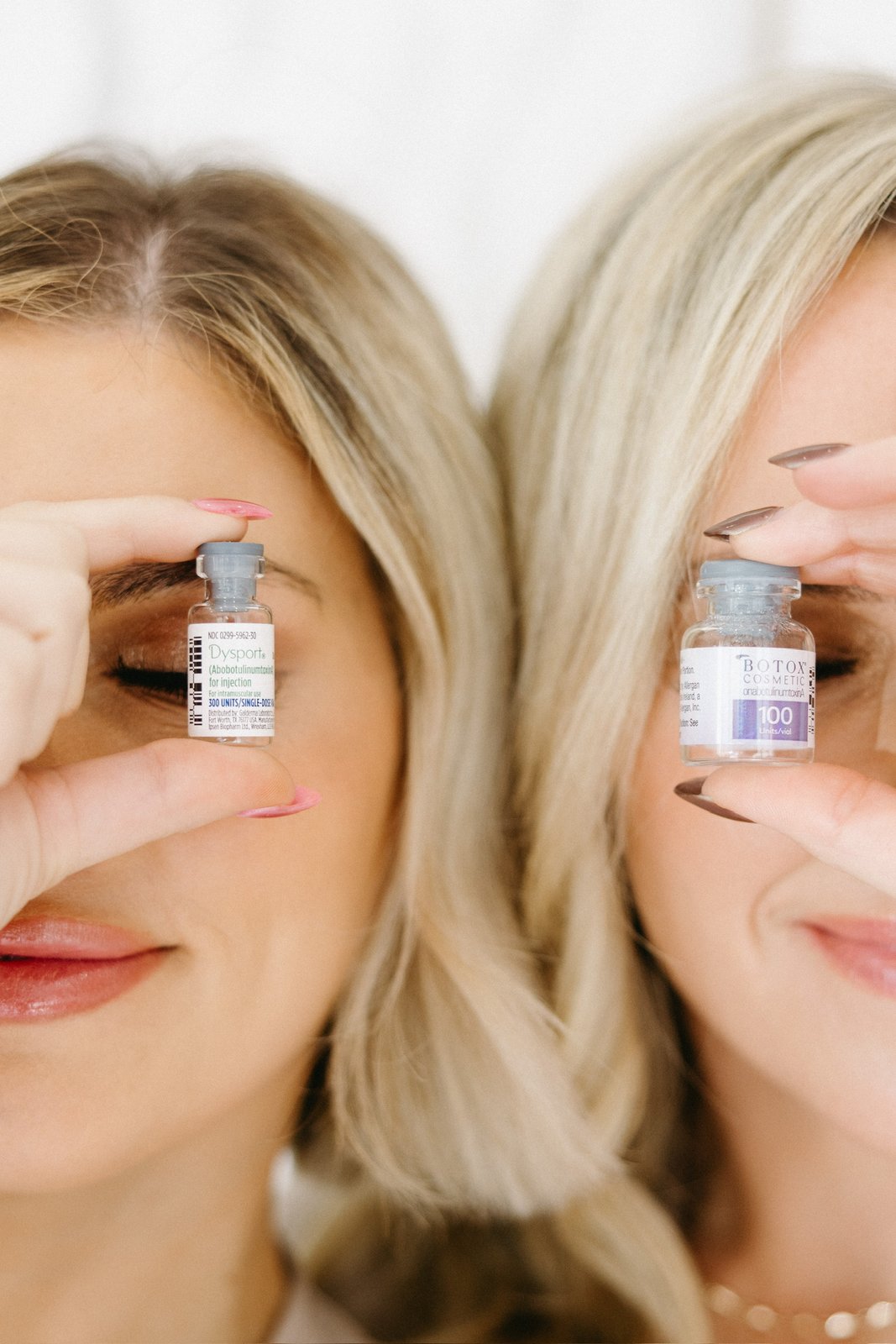
A note on the Botox-vs-Dysport price difference: the per-unit numbers are not directly comparable because Dysport units are not equivalent to Botox units — Dysport requires more units for the same effect. The total cost of a Dysport treatment and a Botox treatment for the same area lands much closer together than the per-unit prices suggest.
Botox vs Dysport (and Xeomin)
All three are botulinum toxin type A neuromodulators. The differences are real but small, and mostly matter to the injector choosing the right tool, not to the patient choosing a brand.
Botox holds its shape precisely — it diffuses less from the injection point, which makes it the preferred choice for small, targeted areas where precision matters (like the lip flip or fine work around the eyes). Onset is typically 5-7 days, full effect around 14 days.
Dysport diffuses slightly more, which can be an advantage for larger areas like the forehead where smooth, even softening is the goal. Onset is often faster (2-3 days). Privé carries both and selects based on the area and the patient's history.
Xeomin is a "naked" toxin with no surrounding proteins, which some clinicians prefer for patients concerned about antibody formation over time. It exists as a category option; our default toolkit is Botox and Dysport, selected per case.
The honest summary: a skilled injector gets excellent results with any of them. The product matters far less than the hands and the dosing judgment.
What to expect at the appointment
A Botox appointment at Privé runs about 30 minutes. The sequence:
- Consultation + mapping. We assess your facial musculature at rest and in motion, discuss your goals, and map the injection plan. For a first visit this is the longest part.
- The injections. A series of small injections with a fine needle. Botox itself rarely requires numbing; most patients describe a quick pinch. The actual injecting takes a few minutes.
- Aftercare instructions. No exercise, no lying flat, and no facial massage for four hours. Gently animate the treated muscles for the first hour. Avoid the temptation to rub the area.
- The two-week follow-up. Onset begins in 2-4 days; full effect lands around 14 days. We assess at two weeks and add units if the result is too subtle — the additive approach in practice.
Results last three to four months for most patients. Conservative dosing sometimes means returning closer to the three-month mark; most patients settle into a quarterly cadence that integrates well with the Luxe Skin Club rhythm.
Is Botox safe?
Botox has decades of FDA-approved use and one of the most extensive safety records in aesthetic medicine. Administered by a qualified injector, it is very safe. That said, honest medicine means naming the risks.
Common, temporary: bruising at injection sites, mild headache for a day or two, and (uncommonly) mild asymmetry or eyelid/brow heaviness that resolves as the product wears off. These are the realistic, minor risks.
Rare: ptosis (a drooping eyelid) from product migrating to an unintended muscle — technique-dependent and temporary. Allergic reactions are very rare. True antibody resistance is rare.
Contraindications: neuromuscular disorders (myasthenia gravis, ALS, Lambert-Eaton syndrome), pregnancy, breastfeeding, active infection at the injection site, and known allergy to botulinum toxin or its components. We screen for all of these at consultation.
This is where the MD-supervised structure matters most. Dr. Gardner, DO, as Medical Director, is the clinical anchor for the rare scenarios — the accountability that turns a routine cosmetic service into properly supervised medicine.
How Botox fits into a treatment plan
Botox at Privé rarely operates in isolation. For most patients the right combination is Botox layered with dermal filler for areas of true volume loss, Sculptra for gradual collagen-driven structural restoration, regenerative work like SkinPen + Ariessence PDGF for skin quality, and skin maintenance through the membership cadence.
This layered approach is part of why our dosing can stay conservative. We are not asking Botox to do the work of three treatments. We are asking it to do the work of one, well. The most common path to the over-treated face is asking a single modality to carry the entire result.
Frequently asked
How much does Botox cost in Dallas at Privé?
Botox is $13 per unit and Dysport is $4 per unit, priced transparently. A typical forehead-and-frown treatment uses roughly 20-40 units of Botox depending on muscle strength and goal. Member pricing applies to Luxe Skin Club members. The unit count for any individual is determined at consultation.
How many units of Botox do I need?
It depends on the area and muscle strength. General starting ranges: glabella 16-25 units, forehead 8-16 units, crow's feet 8-12 units per side, masseter 20-30 units per side. We begin at the lower end and adjust at a two-week follow-up rather than dosing to maximum on the first visit.
Is Botox safe?
Botox has decades of FDA-approved use and an extensive safety record when administered by a qualified injector. Common temporary effects include bruising, mild headache, and rarely asymmetry or eyelid heaviness that resolves as it wears off. Contraindications include neuromuscular disorders, pregnancy, breastfeeding, and active infection at the site. All treatment is RN-led and MD-supervised by Dr. Gregory Gardner, DO.
Will my expression still look natural?
At Privé, yes — preserving natural expression is the defining intent of our conservative-dosing philosophy. The goal is softened lines with preserved movement, not a frozen face.
How long does Botox last?
Most results last three to four months. Conservative dosing sometimes means a slightly shorter window, but most patients settle into a quarterly cadence. Results tend to last longer with consistent treatment over time.
What is the difference between Botox and Dysport?
Both are botulinum toxin type A. Dysport diffuses slightly more and may show onset faster; Botox holds its shape more precisely for targeted areas. Privé carries both. Pricing differs ($13/unit Botox, $4/unit Dysport) because the units are not equivalent — Dysport requires more units for the same effect.
What's the difference between Botox and filler?
Botox relaxes muscles to soften dynamic lines from movement. Dermal filler adds volume to restore structure (cheeks, lips, jawline). They address different problems and are often used together in a layered plan.
Can I get Botox under my eyes?
Botox can be used cautiously in the lower eyelid for certain patients, but it is technique-sensitive and off-label, and over-treatment can cause puffiness or an unnatural look. We are selective; many under-eye concerns are better addressed with regenerative skin treatments or filler depending on the cause.
Can Botox lift my brows?
Yes — a Botox brow lift uses a few precisely placed units (1-3 per side) to relax the muscles that pull the brow down, letting it lift subtly. One of the most rewarding conservative-dosing applications, and easy to overdo if not done carefully.
Does Botox prevent wrinkles before I have them?
'Preventative Botox' uses small doses to soften the movement that, over years, etches dynamic lines into static ones. There's reasonable logic for the right patient, but it isn't necessary for everyone — we discuss whether it's appropriate rather than recommending it by default.
Will I become resistant to Botox over time?
True antibody resistance is rare. More often, patients who feel Botox 'stopped working' have stronger muscle compensation, are spacing treatments too far apart, or were under-dosed. Conservative dosing done consistently tends to produce better long-term softening, not resistance.
Who performs and oversees Botox at Privé?
Botox is administered by Elizabeth Hurley, RN, BSN, CANS — a Certified Aesthetic Nurse Specialist, a credential held by only seven nurses in Texas at the time of her certification — with medical oversight by Medical Director Dr. Gregory Gardner, DO.
When Botox isn't the answer
Honest medicine includes knowing when a treatment isn't right. Botox softens dynamic lines from muscle movement. It does not restore lost volume (that's filler or Sculptra), it does not resurface or improve skin texture and tone (that's regenerative and laser work), and it does not lift significantly sagging tissue (that may be a surgical conversation).
When a patient comes in asking for Botox but what they actually need is volume, skin quality, or surgical lifting, we say so. Sometimes the right answer is a different treatment entirely; sometimes it's Botox as one layer of a broader plan; occasionally it's a referral to a board-certified surgeon. The consultation is where that gets sorted — honestly, before any needle comes out.